
Facilities Protected With Low-Maintenance Systems
Commercial Roofing in Hedley for businesses with flat roofs, aging TPO membranes, or leaking low-slope systems
Flat and low-slope commercial buildings face water pooling that accelerates membrane degradation, particularly when drainage slopes fall below the one-quarter inch per foot needed to move water toward scuppers and interior drains. Pearson Plus Roofing installs, replaces, and maintains commercial roofing systems across Hedley, focusing on TPO roofing that delivers thermal efficiency and resistance to UV exposure in environments where roof surfaces reach temperatures exceeding one hundred sixty degrees during summer months. You need commercial roof replacement when seams separate due to thermal cycling, when punctures from rooftop equipment compromise waterproofing, or when ponding water remains visible forty-eight hours after rainfall, indicating inadequate slope or clogged drainage.
Commercial TPO roofing installation involves mechanically fastening insulation boards to the roof deck, rolling out thermoplastic polyolefin membranes in wide sheets, and heat-welding seams to create monolithic waterproofing that eliminates the weak points found in adhesive-based systems. This process strengthens your building envelope by preventing air leakage at the roof level and improves thermal efficiency through reflective white surfaces that reduce cooling loads by rejecting solar heat rather than absorbing it into the building. Commercial roof repair addresses localized failures like damaged flashing around HVAC curbs or tears caused by foot traffic during maintenance activities, using patch materials that heat-weld into the existing membrane for seamless integration.
Arrange a facility assessment to evaluate current roof conditions and determine whether targeted repairs extend membrane life or full replacement becomes necessary to avoid interior damage.
What Changes After Installation Completes
Commercial flat roofing installation begins with removing existing built-up roofing or deteriorated membranes, followed by inspection of structural decking for rust perforation in metal deck systems or rot in wood substrates. Insulation boards install next, increasing R-value while creating the slight slope needed for positive drainage, then TPO membranes roll out and heat-weld together using hot-air equipment that creates seams stronger than the membrane itself. Proper installation includes detailing at parapet walls, sealing penetrations for vent pipes and electrical conduits, and securing edge terminations to resist wind uplift during severe weather events common in the Texas Panhandle.
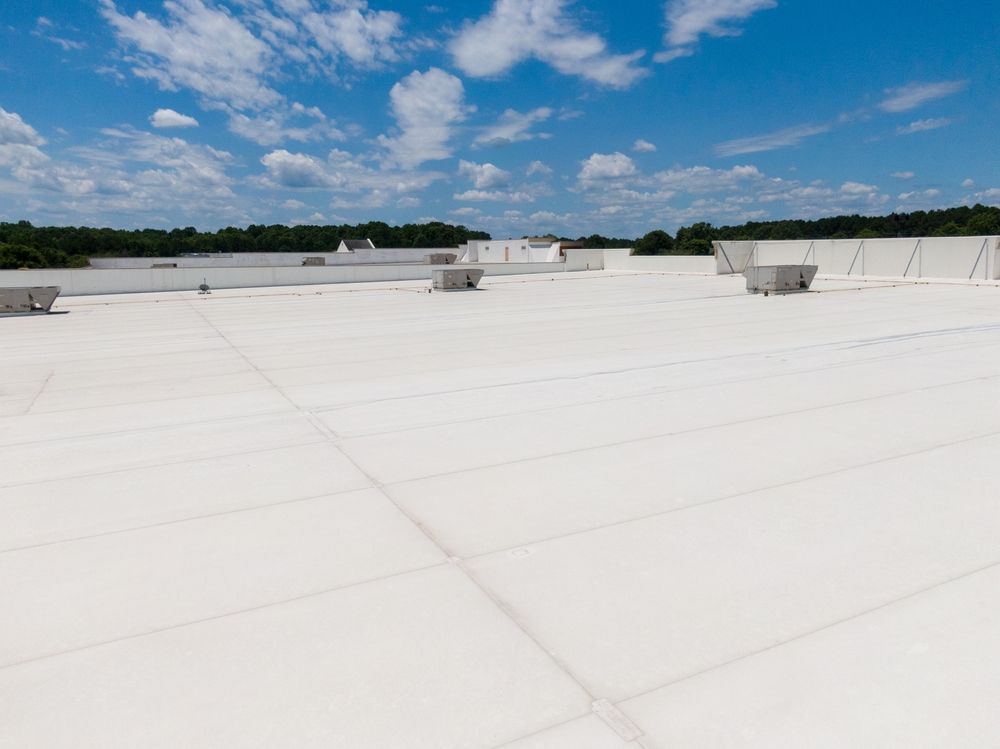
Once finished, your roof sheds water completely during rainstorms, with no standing puddles remaining after drainage systems clear runoff through scuppers or internal drains. The white TPO surface reflects sunlight visibly, reducing rooftop temperatures and lowering the workload on HVAC systems that cool interior spaces. Seams remain flat and uniform without buckling or gaps, and flashing details at equipment curbs show clean folds and secure attachment that prevents wind from lifting membrane edges. You notice reduced energy costs within the first billing cycle as reflective roofing decreases heat transfer into the building.
Commercial roof maintenance involves quarterly inspections to check seam integrity, clear debris from drains and scuppers, and verify that rooftop equipment installations haven't punctured the membrane during service work. TPO roofing resists algae growth and requires minimal upkeep compared to built-up systems that need periodic recoating, but foot traffic should follow designated walkway pads to avoid unnecessary wear on membrane surfaces.
Common Questions About This Service
Business owners often ask about durability, maintenance requirements, and how commercial roofing differs from residential systems when planning facility improvements.
What makes TPO roofing suitable for commercial buildings?
TPO membranes resist UV degradation without requiring reflective coatings, handle thermal expansion and contraction through flexible seam construction, and maintain waterproofing integrity across large uninterrupted surfaces typical of commercial roof areas.
How long does commercial roof installation take?
Installation duration depends on building size and weather conditions, but most commercial projects in Hedley proceed in sections to keep portions of the facility protected while work continues, with completion timelines communicated before the project starts.
What happens during commercial roof inspections?
Inspections document membrane condition, check for punctures or seam separation, evaluate drainage performance by identifying areas where water ponds, and assess flashing details around all roof penetrations to catch problems before leaks develop inside your building.
When should commercial roofing be replaced instead of repaired?
Replacement becomes necessary when membrane damage exceeds twenty percent of total roof area, when insulation beneath the membrane becomes saturated from chronic leaks, or when the existing system no longer meets current energy codes for your facility type.
What does commercial roof maintenance include?
Maintenance involves clearing drains and gutters, inspecting seams and flashing twice annually, documenting any new equipment installations that penetrate the roof, and scheduling minor repairs before isolated failures spread across larger membrane sections.
Pearson Plus Roofing works with property managers and business owners to develop maintenance schedules that protect your investment and prevent unexpected failures. Contact our office to schedule a facility roof assessment and receive a maintenance plan tailored to your building's age and roofing system type.